
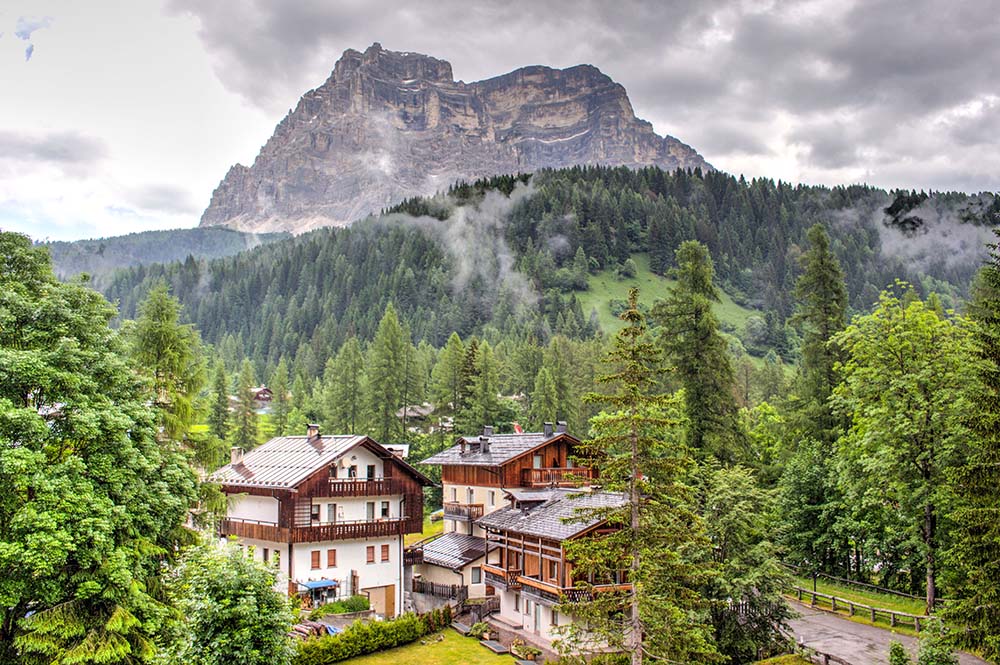
Are you fascinated by a mountain range landscape? Are you fond of mountain hiking, conquering heights, admiring the natural scenery, counting kilometers you have traveled? And have you ever thought of taking that to the next level? If so, then you should become familiar with Via Ferratas! They are becoming more and more popular. I’m going to give you a taste of adrenaline delight and help you get to hardly reachable places, from which you can enjoy even more impressive view.
Via Ferrata – what is it?
Reference literature defines it as a “protected climbing route.” Via Ferratas were originally created during the First World War, in order to help the troops move through mountain passes more easily. But what does it mean in practice? It is usually a wire rope fixed to the rock. But also, metal ladders, footholds, or various handles. In fact, anything that can be used as aid to climbing.
Nowadays, Via Ferratas serve mainly to mountain climbing enthusiasts craving some adrenaline, and new ones are still being created.
Rock-climbing equipment
Via Ferratas equipment includes a climbing harness with two snap-hooks. The climber is belayed by these, as at least one snap-hook must be always clipped. Also, a helmet is extremely important, and gloves are not bad either. If you are interested, you can buy it at Amazon.
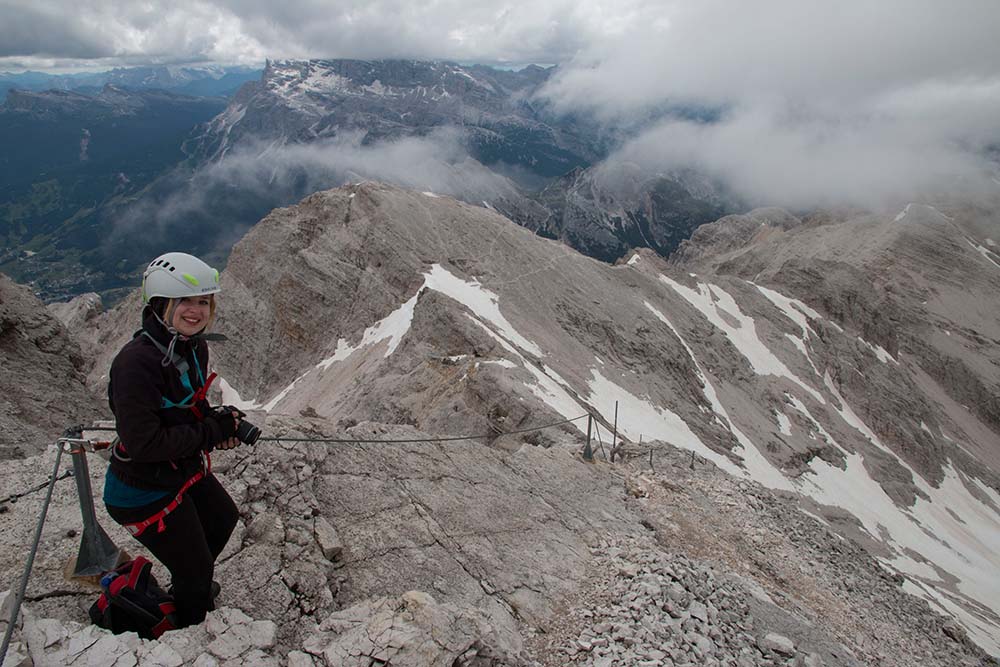
A typical via ferrata – a steel cable attached to the rock
Accommodation in the Dolomites
While searching for accommodation in Italy, we picked the cheapest option. It showed that it was not the best idea because our hotel was too far away from Cortine dʼAmpezzo. So, what we saved up on accommodation was spent on gas. I recommend staying in a hotel in Cortine dʼAmpezzo. It will save you time and money. Optimally, try to look for a hotel around 3 months before your planned trip, except for August when there is summer vacation there and most factories are on vacation for a whole month, so it is overcrowded almost everywhere in Italy.
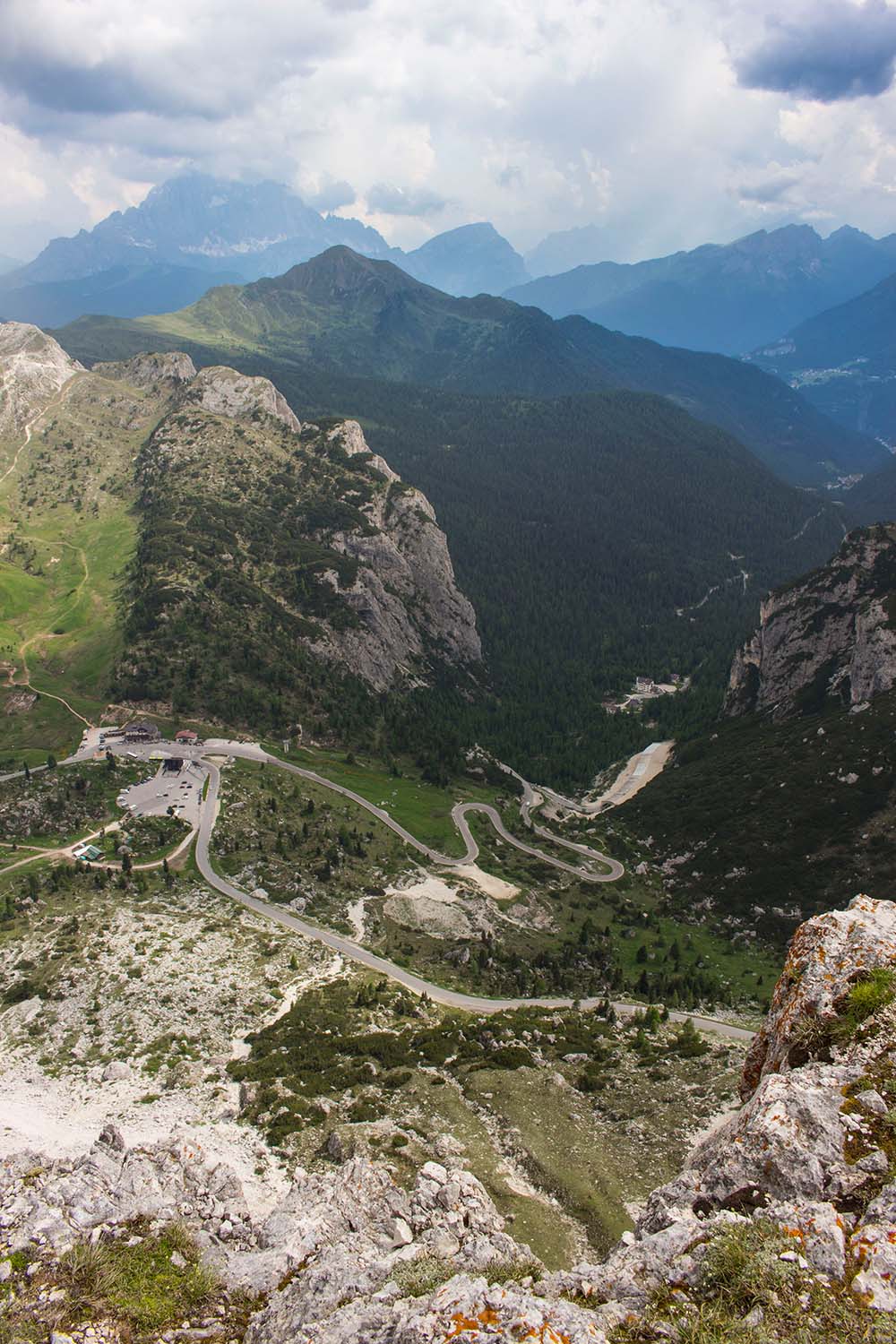
 For fans of motor vehicles, it is a must to visit a motorway in Passo Giau, characterized by its hairpin turns. Definitely, it is an incredible experience for drivers. And if you are lucky, you may encounter some rare car.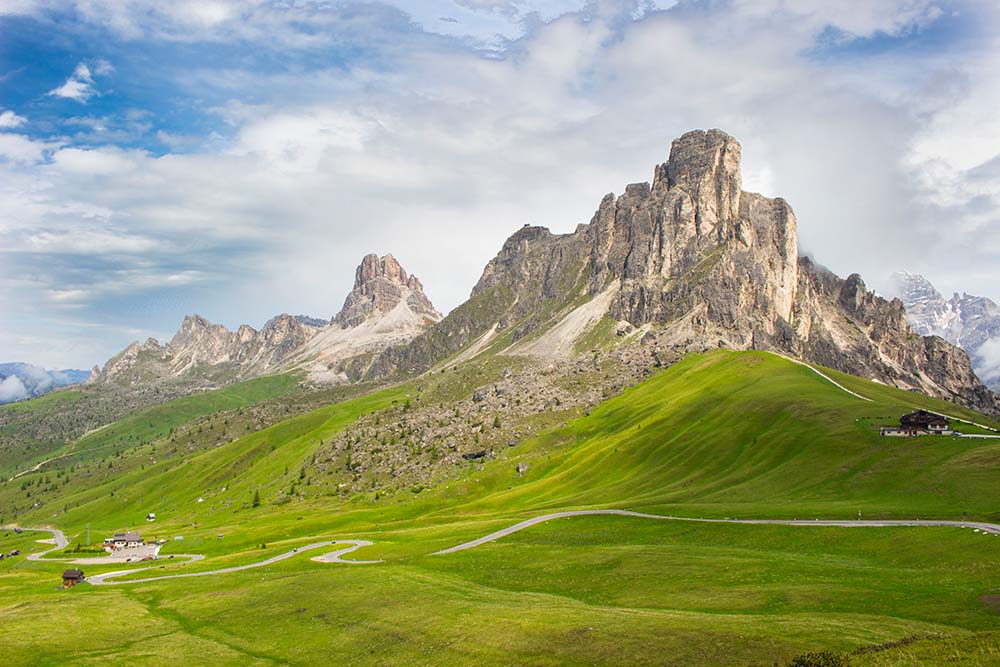
View of the Passo Giau
Via Ferrata inside the Cave – Following the Troops’ Trail
Name of the via ferrata : Kaiserjägersteig a Galleria Lagazuoi
Difficulty : A – for begginers
The highest point : Lagazuoi Piccolo (2 788 m )
For day one of our Via Ferrata trip, we picked a track that was the easiest in terms of climbing. However, it was not easy to walk anyway. But it was our favorite nevertheless.
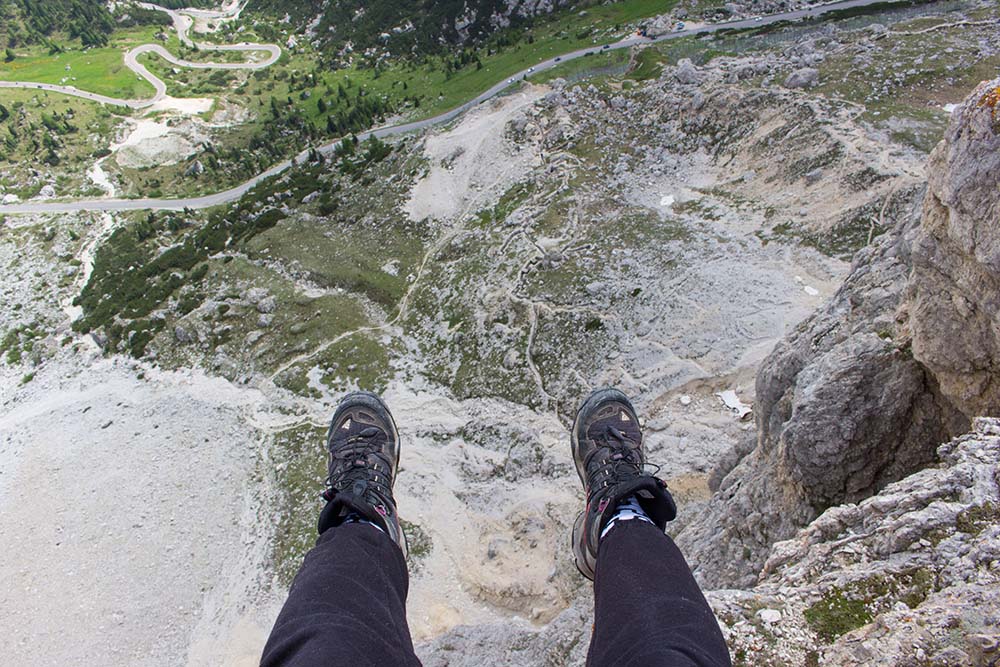
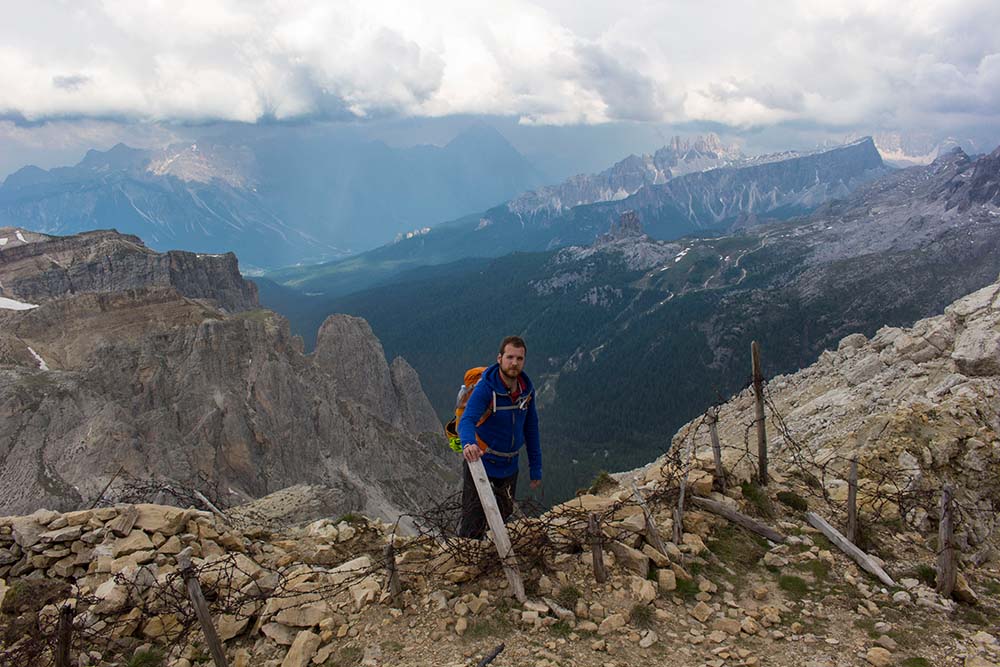
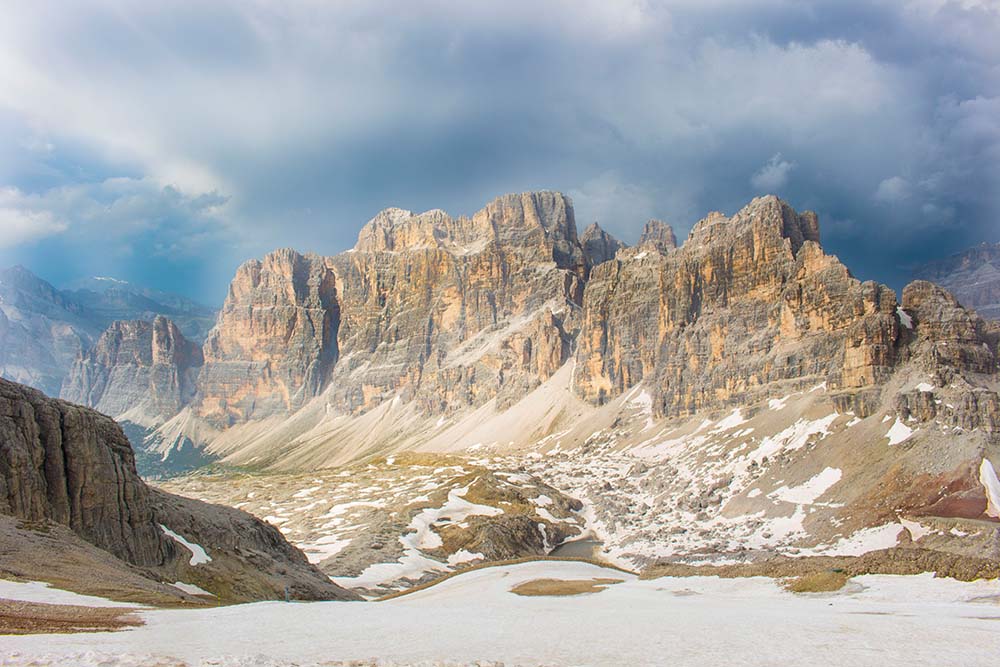
In the first half of the track, there is a very steep way up the hill leading to the peak next to the base of a former glacier. Up there, you can enjoy an amazing view of the peaks of the Dolomites. During your ascent, you will come across trenches and tunnels from the First World War. The way up takes approximately 3 hours and there is a restaurant on the top where you can have a snack.
We didn’t have a good weather that day because the storm was approaching us. That is the worst that can happen on such trip. Climbing a Via Ferrata is the same as climbing a lightning conductor. So please, pay attention to the weather forecast, in order to avoid getting into danger.
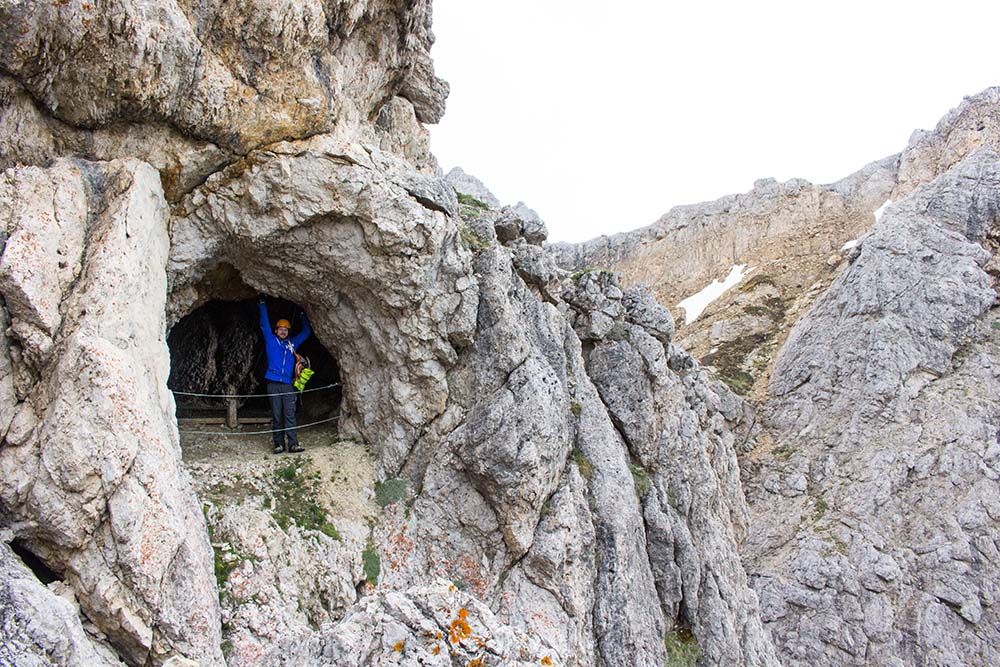
Now, get ready to the best part. The descent! On the right of the restaurant, there is a tunnel that the troops used to use. We definitely recommend having the Via Ferrata equipment with you there. A helmet and a flashlight may come in handy. You can clip the snap-hook on the metal handrail bordering the stairs. They are wet and very slippery.
Even though this Via Ferrata does not offer any extraordinary experience for climbers, we honestly enjoyed it. The track was interesting because we could admire beautiful views and explore the tunnels, so we weren’t bored at all.
A Walk under the Waterfall
Name of the via ferrata : Cascate di Fanes
Difficulty: A – for beginners
This trip requires basic climbing skills, so it is suitable for beginners. We named this Via Ferrata the “water” Via Ferrata, due to the majestic waterfall under which you walk. The track goes alongside the beautiful riverbed, which leads you to the bottom. But you might get soaked if you are not skillful enough.
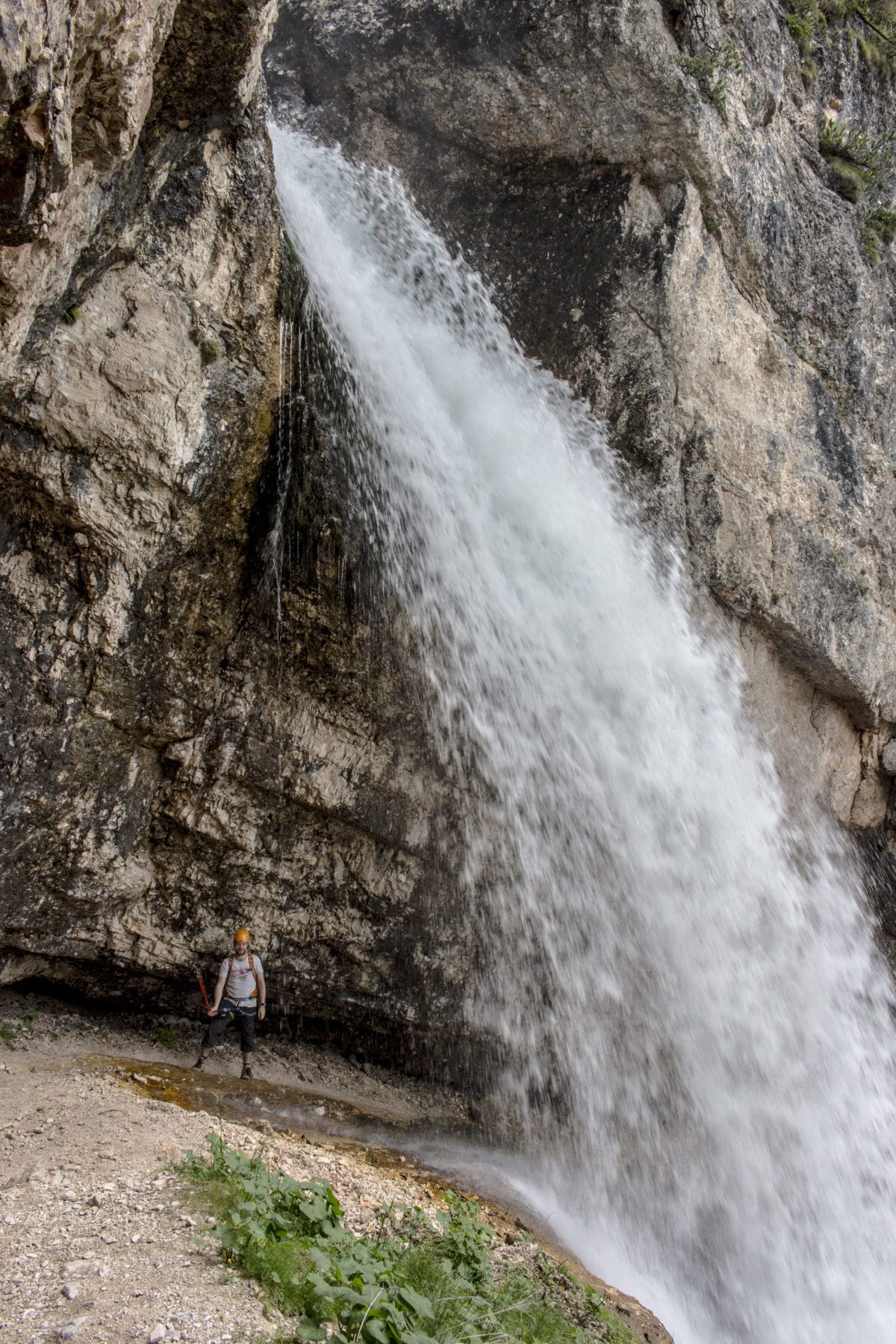
The path under the waterfall is also secured
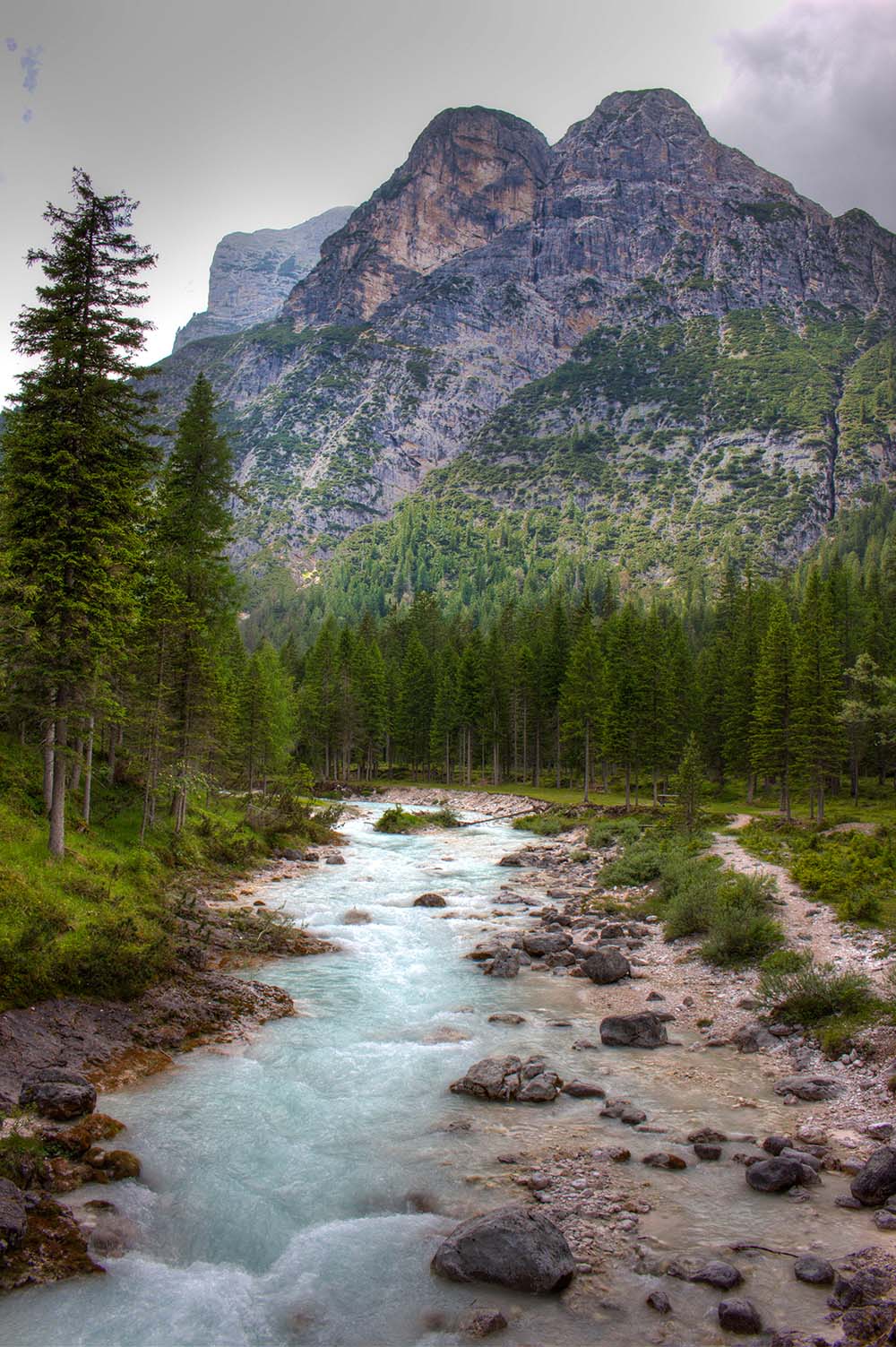
To access ferrata you need to walk in the beautiful valley along the river
The Climb of More Than 3.000 Meters
Name of the via ferrata : Sentinero Ivano Dibona
Difficulty : B – for advanced
The highest point: Cristalino d´Ampezzo ( 3 008 m )
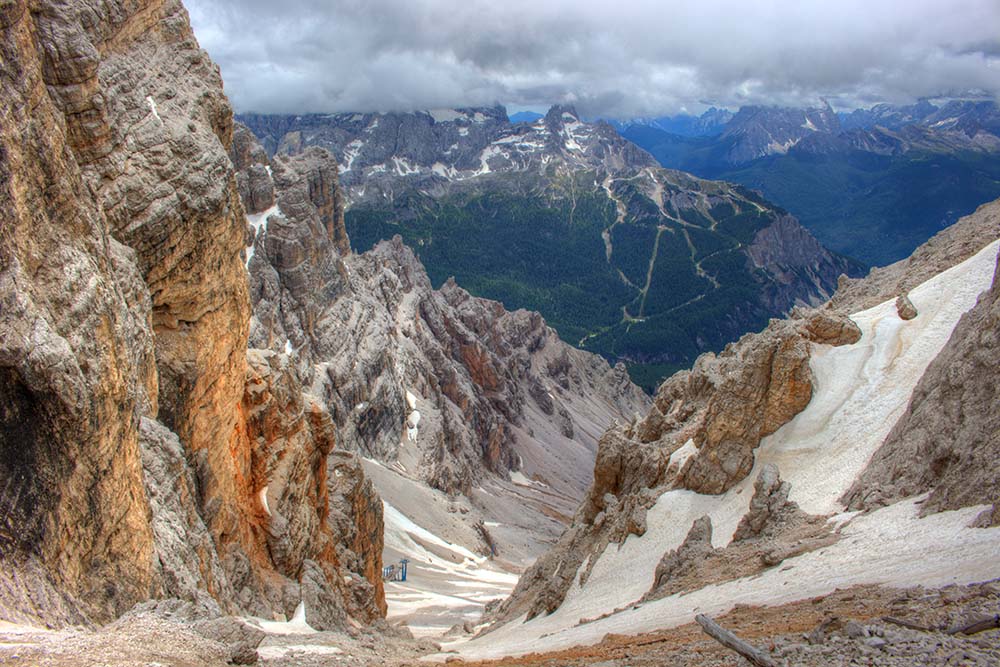
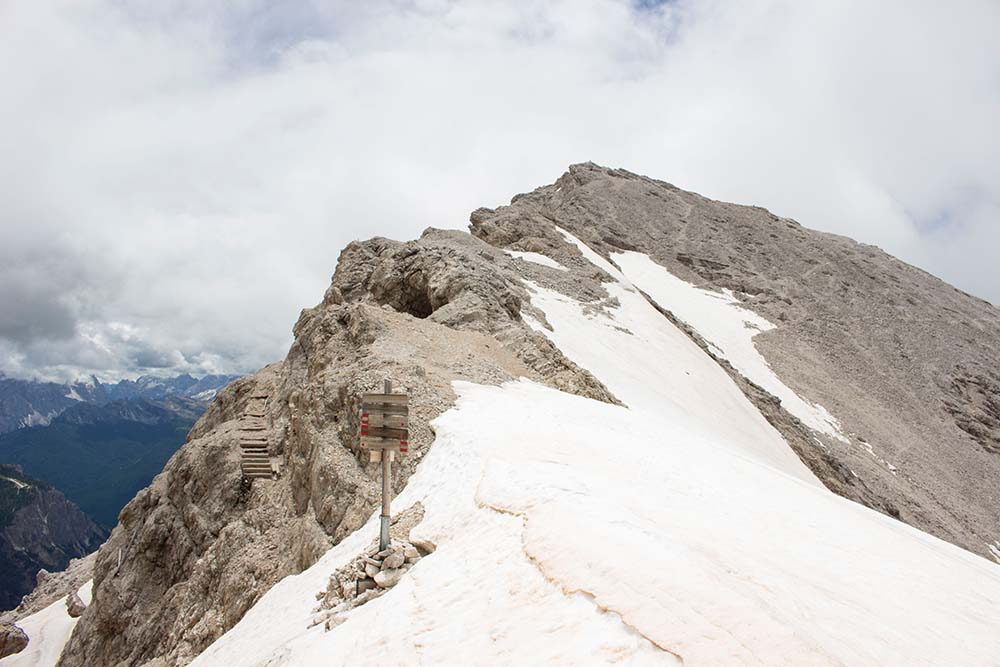
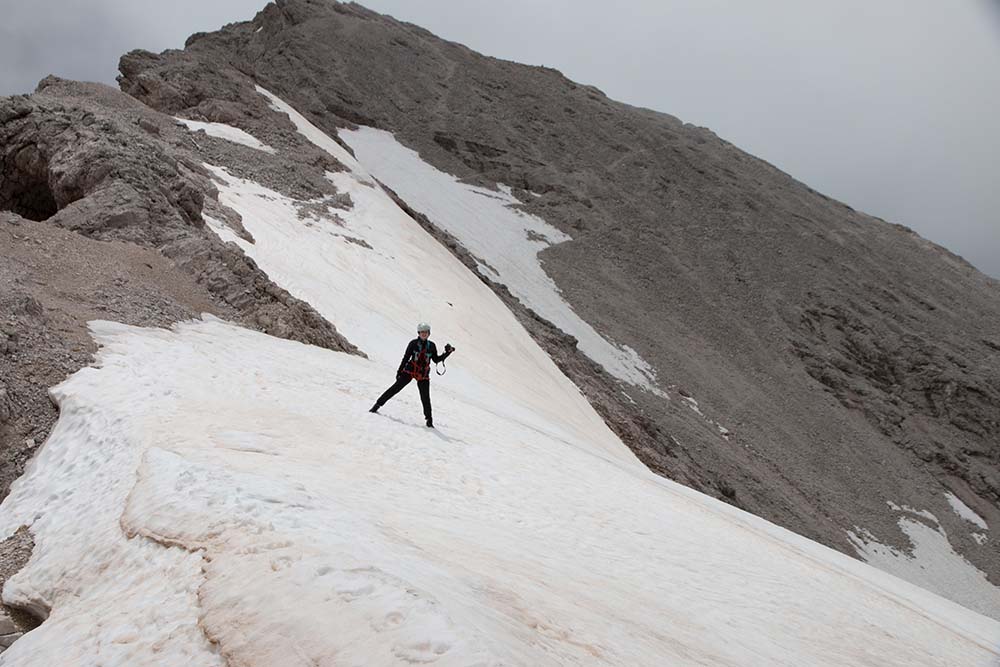
Finally, it’s here! A challenge for courageous beginners! This Via Ferrata requires not only basic skills but also a good training. Unfortunately, we didn’t manage to go through the whole way because it’s really long, but maybe next time we will.
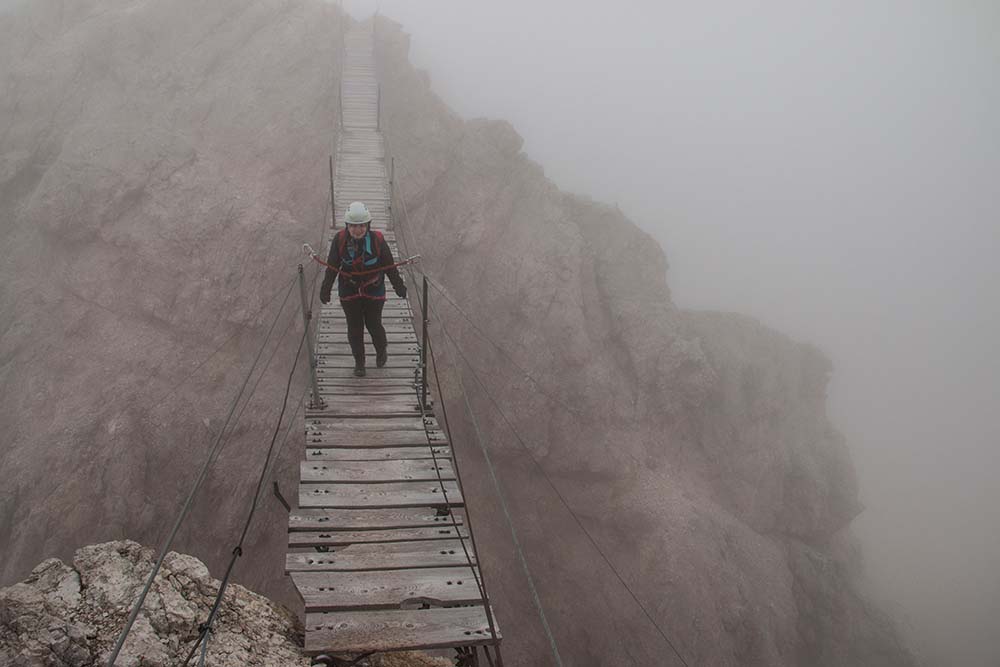
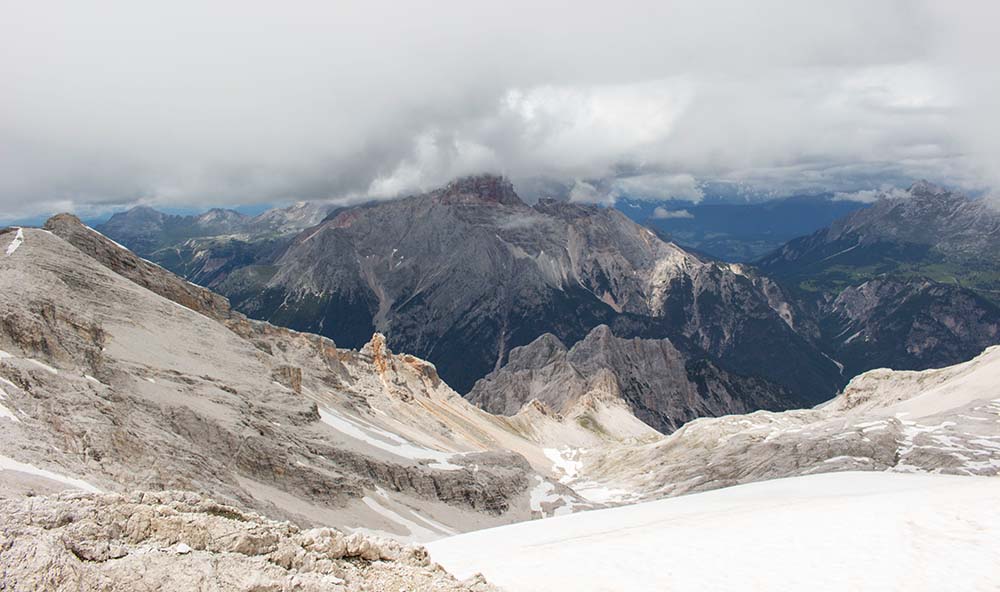
There are two aerial lifts which you can use to get to the top. While sitting in the second one, you might feel that it might be its last journey. The Via Ferrata itself is not that demanding. However, there were moments which required some skills. The highest spot you can reach there lies at 3.008 meters above sea level. The track goes through mountain ridges and through former front lines. There is a breathtaking view of the mountain pass, and it’s really worth it.
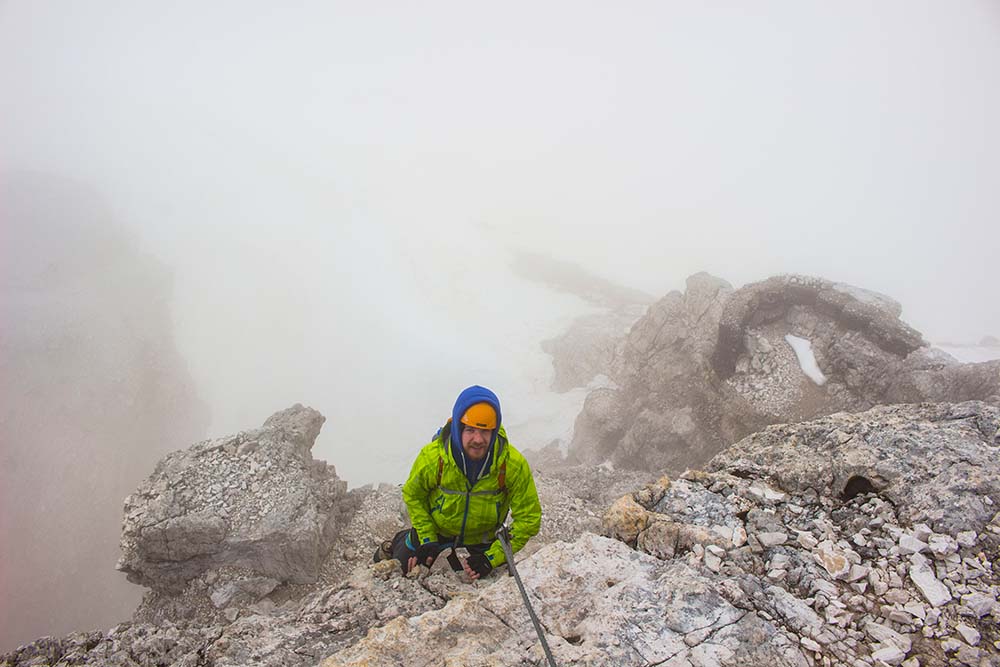
 In this case, it is essential to be lucky when it comes to weather. Most of the time of our trip, it was foggy, but sometimes the wind blew, so we could enjoy the views. The best time to go there is at the end of summer. It is most likely that it would be sunny by that time of the year.
Liked this post? PIN IT FOR LATER!!

Leave A Comment